


A co-operative society is a voluntary association of individuals united by shared needs and mutual interests, who come together to promote economic, social, and cultural benefits through a collectively owned and democratically controlled enterprise. These societies are formed to serve their members, not to maximize profits. Each member typically has one vote, ensuring equal say in decision-making regardless of investment size. Co-operative societies operate in various sectors such as agriculture, healthcare, banking, housing, and retail, and are guided by principles like self-help, responsibility, equality, and solidarity.
Unlike traditional businesses that prioritize profits for shareholders, co-operative societies reinvest their earnings back into the organization to improve services, support member welfare, or expand community initiatives. This makes them especially valuable in sectors where affordability and accessibility are essential—such as healthcare, education, and agriculture. Members benefit directly through fair pricing, quality services, and a sense of ownership and accountability within the system.
In regions like Kerala, co-operative societies have played a crucial role in empowering communities and promoting inclusive development. They often operate with transparency and social responsibility, filling the gaps left by both public and private institutions. By promoting democratic participation and collective growth, co-operative societies continue to be a vital model for sustainable development and equitable service delivery.

We offer a wide range of healthcare
services to meet your needs.
contact us

info@tmchospitals.com
pro@tmchospitals.com

9400904730, 0484-2955310
8281644604

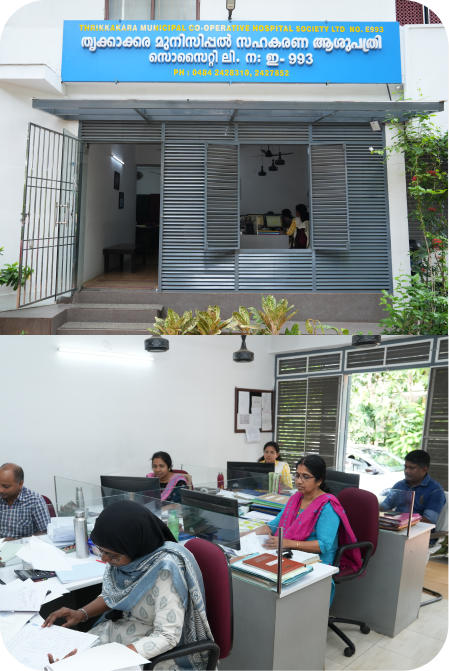
thrikkakara municipal co-operative hospital
society ltd. no e-993, Seaport Airport Road,
Kakkanad, Kochi - 682030
Copyright © 2025 All Rights Reserved.